Renee Sagua is gaining boardroom experience that many professionals only encounter much later in their careers. An alumna of La Sainte Union Catholic School in Camden, she returned to her former school in a new role as school governor.
Working in investment management and representing the youngest voice on the governing board, Renee has brought these perspectives to discussions about strategy and student experience.
We spoke to Renee about what inspired her to become a governor, what the role really involves, and why more young professionals should consider stepping forward.
School governors play a key role in shaping our schools and gain valuable skills along the way. If you would like to explore becoming a school governor in Camden, or to learn more about the role, please do reach out to governance@camdenlearning.org.uk.
Q: Tell us about your role as a governor…
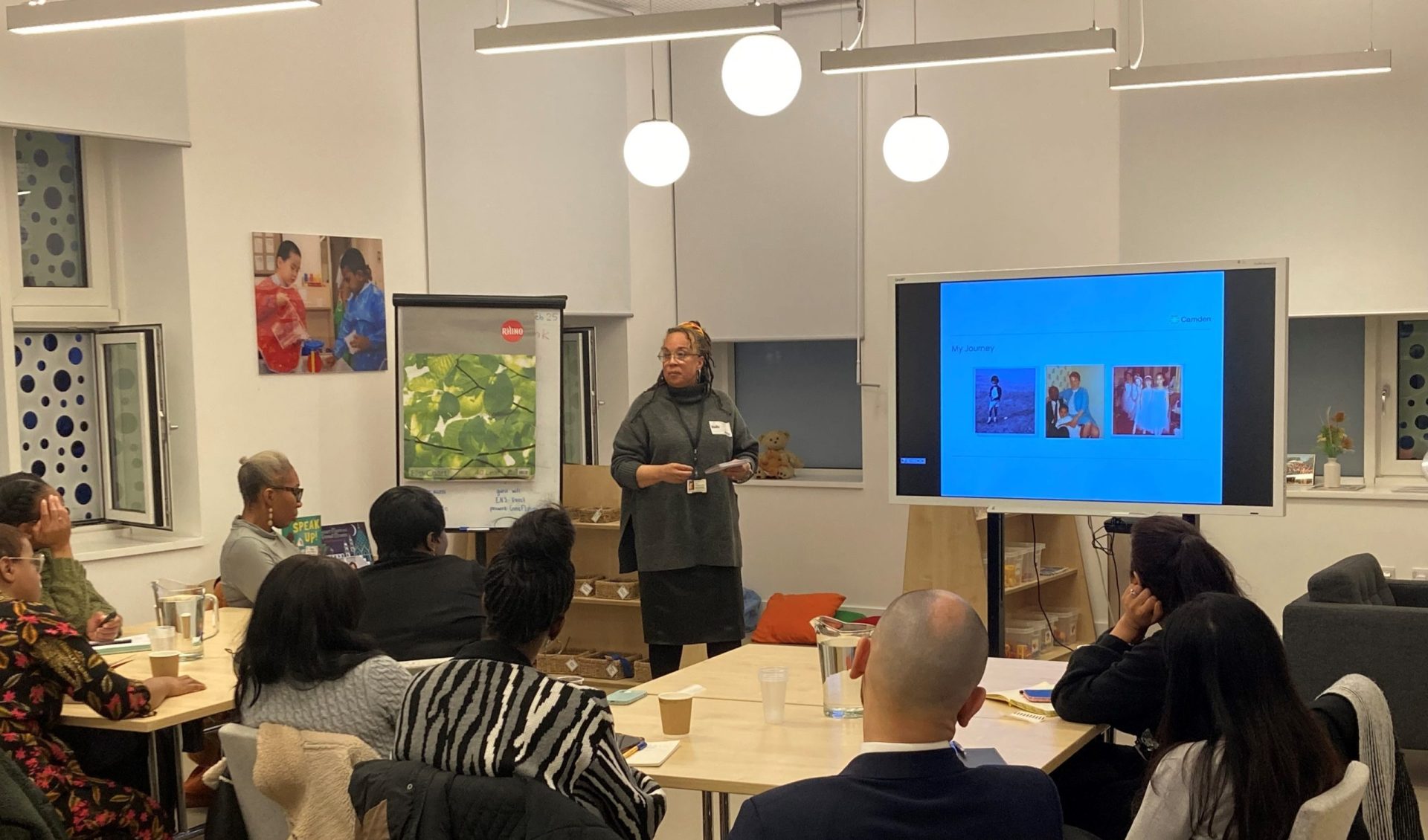
I’m a governor at La Sainte Union in Camden, which is actually the secondary school I went to. It was a coincidence that I was matched with the school through the Young Governors Initiative programme I took part in, as it could have been any school in Camden. The programme, run by Camden Learning in partnership with Governors for Schools, is specifically designed to get more under-30s involved in school governance.
I was open to primary or secondary and was absolutely delighted when it turned out to be my old school.
Being an ex-pupil means I bring a different perspective to the board. That lived experience can be useful when thinking about how decisions affect students.
Q: What do you do professionally alongside your governor role?
I work in investment management in business development for UK institutional clients, including government institutions and pension schemes.
Q: How did you first become involved in governance?
A contact that I met through work is a governor in Camden and suggested I apply for a place on the Young Governors programme. It introduces you to what governance actually is, what happens at board level in schools and some of the issues state schools are facing.
There were online learning modules, and then the idea is that you get matched with a school.
Before that, I honestly didn’t know how you became a school governor. I didn’t think it was something someone my age could do or that boards were looking for younger people.
Q: What attracted you to the role at this stage in your career?
I was interested in learning more about strategy and how decisions are made at a higher level.
As a pupil, you see the school from one perspective. Being on the governing board gives you insight into how strategic discussions happen: how you support and challenge the executive team and how different factors influence decisions.
It’s also been a really good learning opportunity. At first, I felt like I was mostly observing and listening because there’s a lot to understand about the issues schools face. But over time you get a better grasp of things and can start contributing more.
Q: How do you balance the role with a demanding career?
It is challenging. You get a lot of papers before meetings and, to make valuable contributions, you need to have thoroughly digested them beforehand. I read them from front to back because if you just skim them or rely on summaries you won’t understand the details well enough to ask questions, support and challenge.
Sometimes I’ve had to give up social plans or other commitments to make the time. I used to be involved in other extracurricular groups in finance but stepped back from those so I could focus on this.
For me it’s worthwhile, especially because it’s my old school. I feel like I have skin in the game and want it to succeed.
Q: What does the role actually involve during the year?
There’s one full governing board meeting each quarter. I’m also on the resources committee because of my finance background, so that’s another meeting each quarter as well.
There can also be additional panels or meetings if specific issues come up, for example, if there’s a contested exclusion case.
So typically it might be around two meetings a quarter, but there’s preparation time involved as well.
Q: What difference does having younger governors make?
It’s very important.
Most people on my board are in their 40s and older. Having younger voices adds diversity and different perspectives.
One example was when we were discussing how to promote the school. I’m on LinkedIn every day and suggested we should create a LinkedIn page and promote the school there because that’s where parents and local businesses are.
Social media promotion probably wouldn’t have come up if someone from my generation hadn’t been in the room.
Q: What surprised you most about being a governor?
One thing I didn’t expect is that you really have to advocate for yourself.
If you sit silently in a meeting, no one is necessarily going to ask for your view. So you have to develop the confidence to speak up, justify your opinions and contribute. There isn’t the same kind of hand-holding you might get in a new job.
Q: Is there a common misconception about being a governor?
One misconception is that governing boards are only made up of older, more experienced people and that younger professionals aren’t attractive candidates.
That’s clearly not true.
Another misconception is that it isn’t a big time commitment. It definitely is. If you want to do the role properly, you have to engage fully with the papers and the issues.
Q: Would you recommend becoming a governor to other young professionals?
Yes, absolutely.
There are very few opportunities to get board experience at this stage in your career. If you’re interested in becoming a non-executive director in the future, this is a great stepping stone.
It also helps you think more strategically and exposes you to discussions and decisions you wouldn’t normally see early in your career.
For me it’s been challenging at times, but it’s a really valuable learning experience and definitely worth doing.
If you’re interested in learning more about becoming a school governor in Camden, please email governance@camdenlearning.org.uk or see this page. Programmes like the Young Governors Initiative are helping to open the door for a new generation of board members.