Across the country, schools are facing sustained pressure. Falling pupil numbers, rising levels of special educational needs and disabilities (SEND), and tightening budgets are making it increasingly difficult for schools to operate in isolation.
The direction of travel is clear with fewer standalone schools and a stronger push towards formal structural alignment. As the government prepares its next Schools White Paper, there is an opportunity to broaden a national conversation that has often focused narrowly on whether every school should be part of a multi-academy trust (MAT).
Area education partnerships such as Camden Learning show how collaboration can bring together schools of all types, including academies, voluntary aided and local authority-maintained, to support a range of partnership models that strengthen local provision while respecting different structures and identities.
A local response to a national challenge
The challenges facing Camden schools reflect pressures felt across London and beyond. Over the past five years, Camden has removed ten forms of entry from its reception intake. Borough-wide birth rates have fallen by more than 30 per cent, alongside shifts in family movement during and after the pandemic.
Because school funding follows the pupil, even modest reductions in numbers create significant financial strain. Maintained schools operating in deficit must eliminate this within three years, with local authority approval, or face the risk of closure.
Alongside this, professional pressures continue to grow. Smaller schools can struggle to sustain subject-specific expertise, rising SEND need can exceed the capacity of a single SENDCo, and leadership recruitment is becoming more challenging as progression pathways narrow.
What sets Camden apart is not the scale of these challenges, but how schools have chosen to respond.
Collaboration rooted in place
Camden Learning brings together schools of all types including academies in a borough-wide, school-led partnership. It underpins Building Back Stronger, Camden’s education strategy to 2030, which is founded on a clear principle: schools are strongest when they are rooted in their communities and connected to one another.
Collaboration in Camden is not an optional extra or a structural requirement. It is a shared endeavour, shaped by schools themselves and grounded in trust, professional generosity and local knowledge.
Crucially, Camden Learning also supports a continuum of partnership models. Schools can choose how deeply they collaborate, from informal networks and shared practice, through joint leadership arrangements, to full federations, without being required to leave local authority-maintained status.
To support this work, Camden Learning has developed a Partnership Toolkit, giving schools practical guidance on how to form, deepen and sustain partnerships that are right for their context. The toolkit captures lessons from across the borough and helps schools navigate collaboration with clarity and confidence.
Partnership in practice: what collaboration looks like
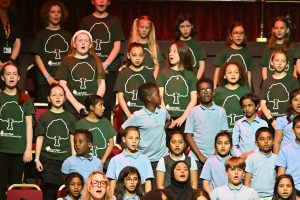
Informal collaboration – the 135 Partnership
The 135 Partnership brings together Gospel Oak Primary School, Netley Primary School, Robson House Primary Pupil Referral Unit, Fleet Primary School, Rhyl Primary School and Primrose Hill Primary School.
Developed organically by practitioners, the partnership focuses on shared professional development, joint approaches to moderation and SEND, coordinated family support and the sharing of staff expertise. It shows how the outcomes policymakers often seek through MATs can be achieved through trust and professional collaboration, rather than top-down restructuring.
Shared leadership – Eleanor Palmer and Hawley Primary Schools
Further along the continuum, the partnership between Eleanor Palmer Primary School and Hawley Primary School was established as a time-limited, two-year arrangement. It has already strengthened recruitment, enriched curriculum design and widened leadership opportunities.
A joint executive headship has increased capacity across both schools, enabling shared roles such as a business manager and subject leadership, while preserving the distinct ethos and identity of each school community.
Merger built on trust – Rhyl and Carlton Primary Schools
The 2021 amalgamation of Rhyl and Carlton Primary Schools followed Carlton’s closure due to falling rolls. Crucially, this process was made possible by the sense of trust developed through existing partnership work.
Clear communication, united leadership and governance, alongside meaningful opportunities for parental voice ensured the change was understood as a merger, not a takeover. The school now operates across two sites as a community hub, offering early years provision, adult learning and family health services. Recently judged “Outstanding” by Ofsted, it demonstrates how partnership can strengthen, rather than dilute, local identity.
Formal collaboration – Torriano and Brecknock Primary Schools
At the more formal end of the spectrum sits the federation between Torriano Primary School and Brecknock Primary School. Shared governance, aligned curriculum, unified inclusion teams and flexible staffing allow for long-term strategic planning and resilience that small schools often struggle to achieve alone.
Moving beyond a binary national debate
Too often, the national discussion about school collaboration is framed as a binary choice: join a MAT or remain isolated.
Camden’s experience shows there is an alternative. Schools need collaboration that reflects their values, history and local context. They need autonomy where it strengthens outcomes, and collective capacity where it reduces risk.
As policymakers consider the future shape of the school system, Camden stands as a powerful example of how schools can choose to work together, stay true to their communities and thrive.