In Camden Learning, we facilitate schools-led Learning Hubs which support peer learning and joint practice development for our partnership of schools across a range of themes, including SEND, early oracy, primary maths, AI and secondary pedagogy.
Between October 2025 and March 2026, Parliament Hill School was delighted to lead on the latest Camden Learning Secondary Pedagogy Hub which focused on adaptive teaching, an instructional teaching approach where teachers continuously adjust their lessons, support and pacing to meet the diverse needs of individual students.
Adaptive teaching enables teachers to respond to pupils’ different learning needs, ensuring that everyone can access a common curriculum and achieve ambitious goals; it encourages teachers to use strategies such as scaffolding, questioning and resources to help all learners succeed.
Following the success of last year’s Hub, the Secondary Pedagogy Hub this year focused on equipping middle leaders to drive the implementation of adaptive teaching within their departments.
Our six-month programme saw middle leaders from secondary schools across Camden explore how evidence-informed approaches can make sure every pupil has access to a high-quality education.
The Hub strengthened participants’ understanding of adaptive teaching for all pupils, including those from disadvantaged backgrounds and those with special educational needs and disabilities (SEND), and helped them to lead on improvements in classroom practice in their own schools.
We held four sessions designed to move from understanding to implementation:
- Evidence base and initial reflection, supported by paired learning walks
- Focus on adaptive teaching through lesson drop-ins and discussion, leading to identification of departmental priorities
- Design of professional learning using Education Endowment Foundation guidance
- Coaching and feedback to support implementation.
The collaborative elements of the sessions, particularly learning walks and peer discussion, supported the participants as they refined their thinking and priorities within their own contexts.
It was incredibly encouraging to see how these middle leaders move from understanding the theory of adaptive teaching to putting it into practice. By the final session, almost all participants had completed structured departmental action plans, using EEF guidance.
A particular strength of the programme was helping middle leaders design more effective professional development for their teams and it highlighted the vital role they can play in turning educational research into consistent classroom practice.
By the end of the Hub, all the participants told us that they had a deeper understanding of adaptive teaching, with increased confidence in applying evidence-informed strategies and supporting colleagues to do the same.
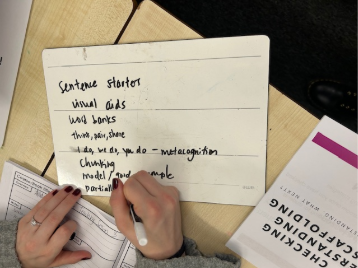
One participant said: “I have enjoyed breaking down specific teaching strategies with a focus on adaptive teaching – this has made them feel all attainable and do-able in the workplace.”
Another added: “The most useful thing for me was having the time to reflect with a trusted partner and schedule lesson drop-ins of each other’s teams. This meant I was able to explore the strengths and areas for development within my team while reflecting on different aspects of adaptive teaching.”
Of course, ongoing in-school implementation will be needed to fully embed changes to teaching practices, but we were very pleased to see the positive impacts of this year’s Hub.
This programme has demonstrated the strength of schools working together in a locality to develop practice and share expertise, supporting the ambition of Camden’s Education Strategy Building Back Stronger for knowledgeable and skilled teachers and leaders who love working and learning in Camden.
You can read more about the Hub here.